← work mcsinger@home:~/work/latentlines
Case study 04 · market intelligence

Latent Lines

Live experiment · public surface

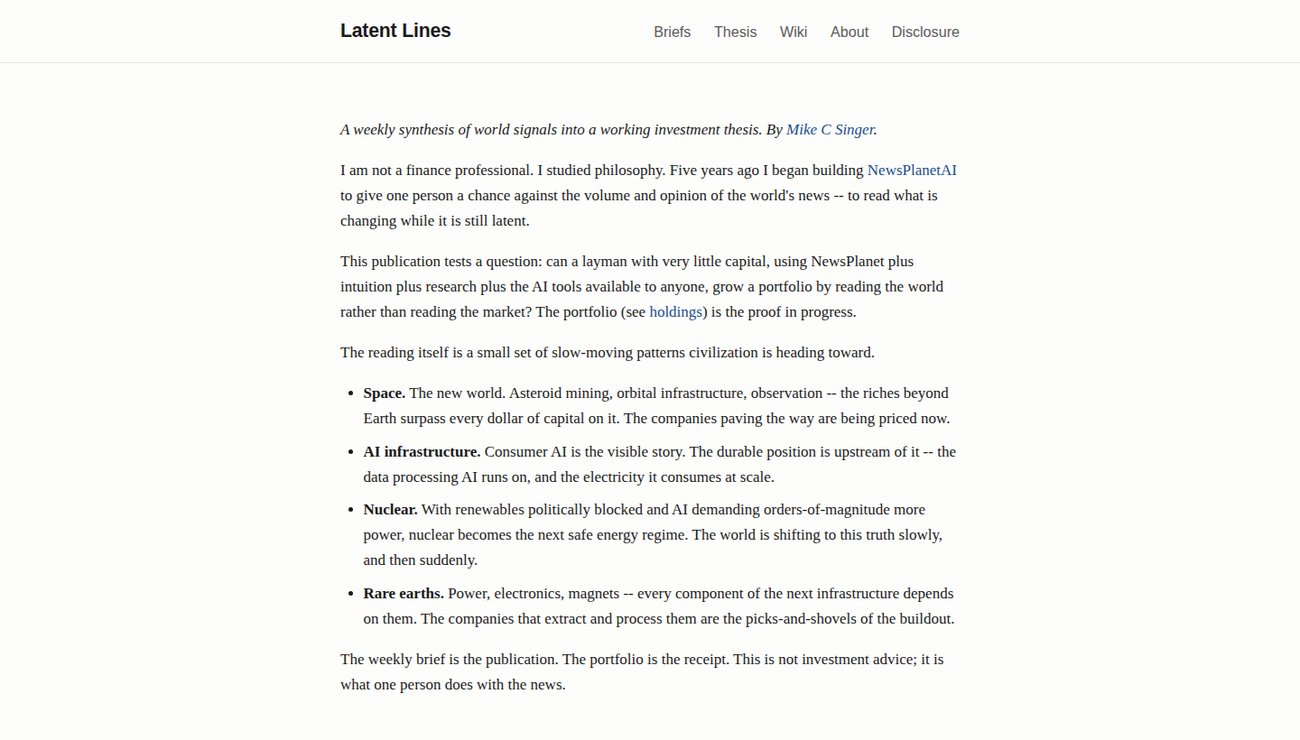
A weekly publication, and the public surface of how I research and trade my own portfolio. Real money, my own calls, self-taught. The thesis: minerals, power, and space, the physical foundations the AI era runs on.

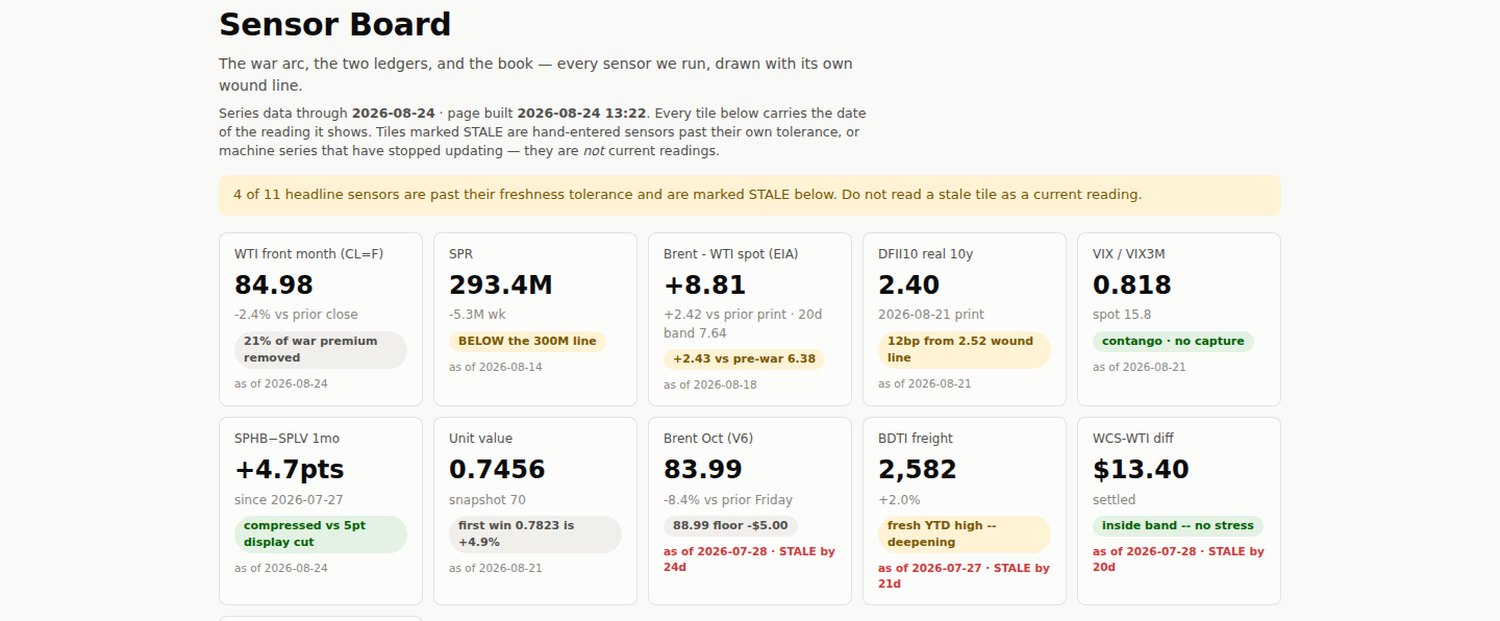
The Latent Lines Sensor Board, a grid of market instruments
The Sensor Board, 24 market series I built to track barrels, power, minerals, and rates, each with its own line.
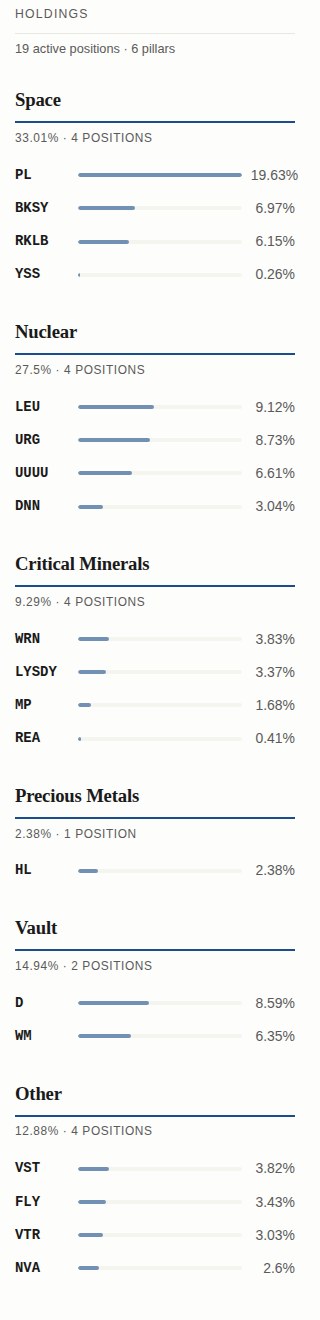
19 active positions
6 thesis pillars
24 market sensors
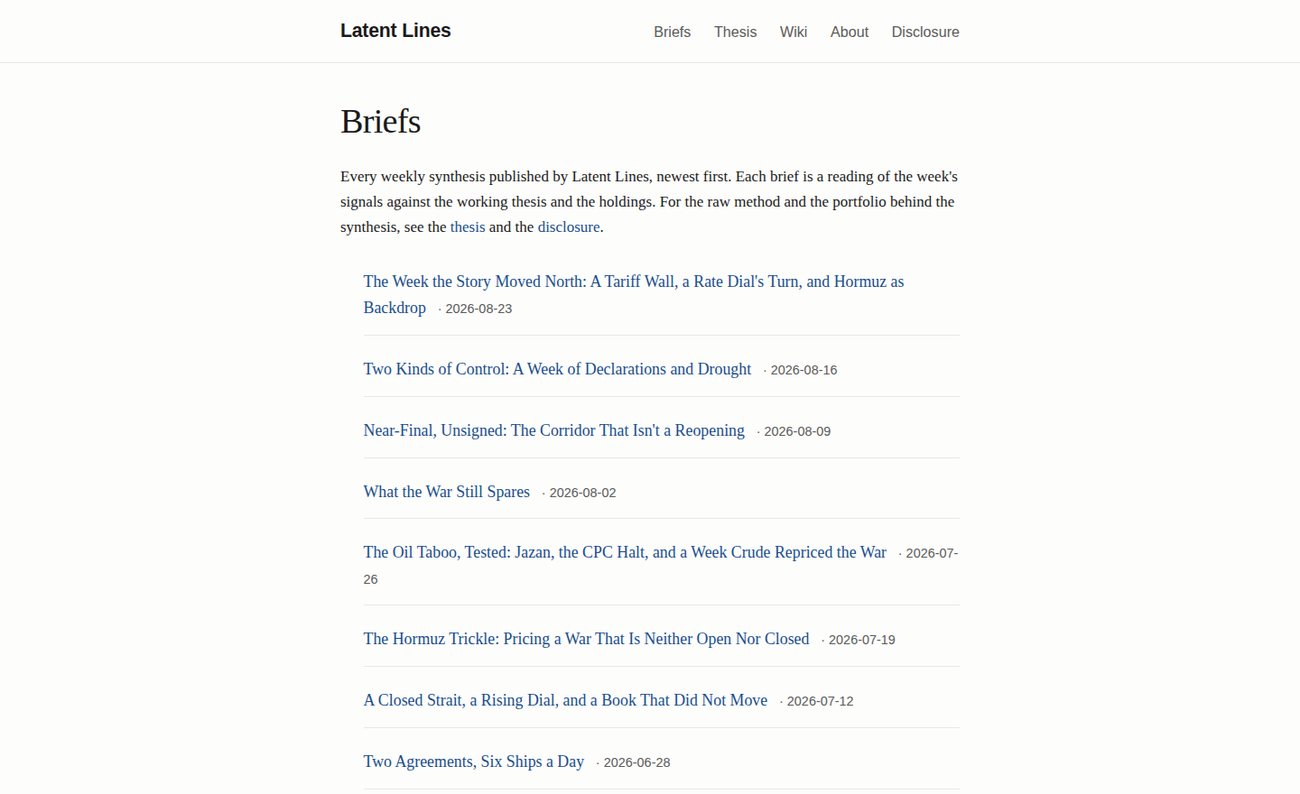
13 weekly briefs
10 verification rules
~1,610 sentinel tests
The problem

Geopolitics moves markets, but the signal arrives late.

By the time an event becomes a narrative, and the narrative reaches an investor, the price has moved. Latent Lines is one idea, tested in public: that reading the news and the physical market together can help one person, me, recognize a structural shift before the story catches up.

The research, mapped

A portfolio held as a running research project, not a scoreboard.

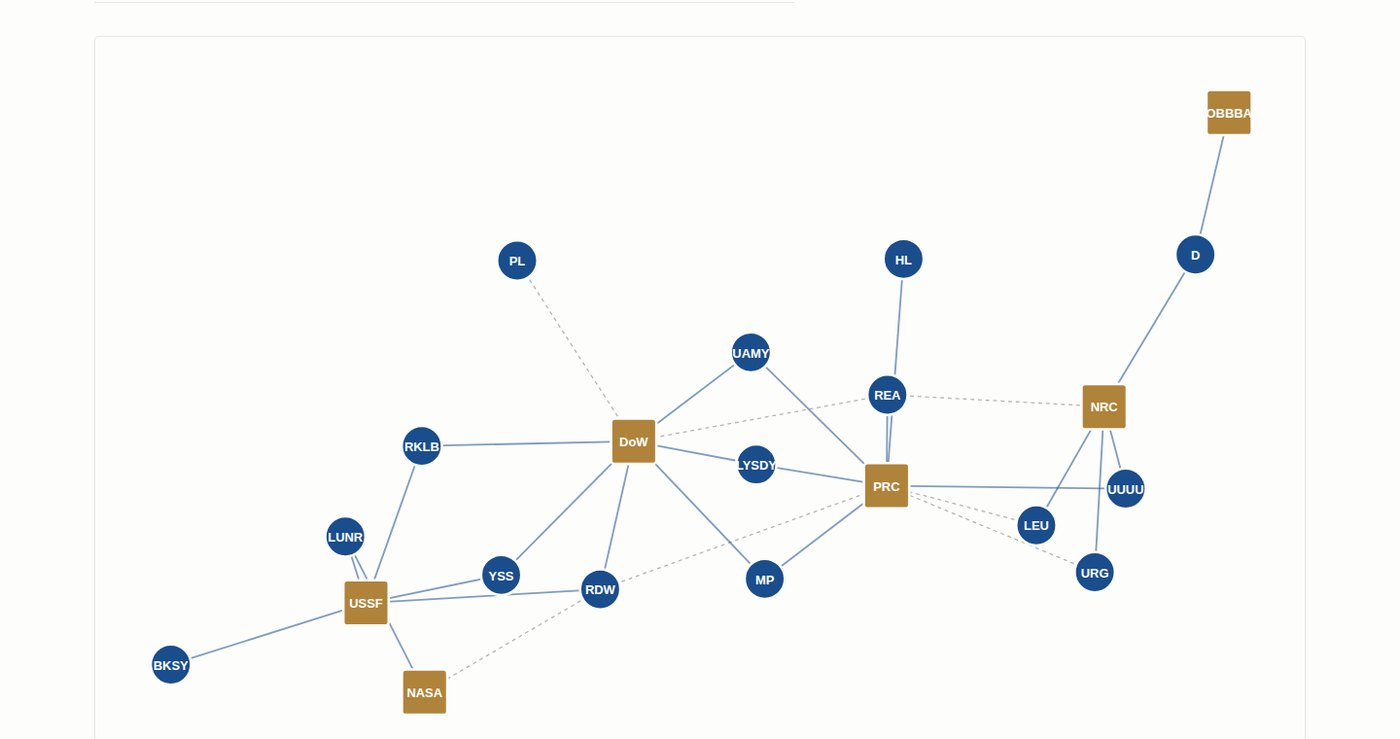
A node-link graph of the portfolio, tickers as nodes, thesis structure as edges
Every position is tied to the thesis, not just a price I liked. I write down why it's there, and I can point back to it later.
How it works

Two channels of research, one person's judgment.

NewsPlanetAI intelligence Research harness wiki · sensors Synthesis thesis + judgment I trade & publish discretionary feeds read my call AI argues the other side
NewsPlanetAI's daily brief and the Sensor Board's market data are two separate channels, I read both every week and write the thesis myself. Before I trade, I try to argue against my own conclusions. I make every call, and the portfolio is real money, not a simulation.
The intelligence
A daily brief pulled from NewsPlanetAI's article feed, curated intelligence, and world model, filtered down to what actually matters to the thesis.
The instruments
A separate board of 24 market series, prices, spreads, yields, ratios, that I check alongside the news: barrels, power, minerals, and rates, each with its own threshold.
The decisions
I hold the thesis and execute every trade myself. Where my broker allows it, I set price levels and resting orders ahead of time, so discipline doesn't depend on me watching a screen. Before I act, I try to argue against my own read, and often ask for that pushback directly.
The public surface
The hard part

The point isn't to be right. It's to catch me being wrong faster than I can rationalize it.

A standing discipline, not a gate
Questioning my own thesis

This isn't an automated check, it's a standing habit: before I publish, I push back on my own numbers and conclusions. I've caught real errors this way, more than once, before they went public.

Pre-registered, not post-rationalized

Price levels get written down before the trade, not after. Where my broker supports it, the order sits and fires on its own. Where it doesn't, I still hold myself to the number I wrote down in advance.

Even I don't fully trust my own notes

A set of scripts checks my written claims against my actual data before every session. They've caught real drift, once, the model behind my read of the news went stale for weeks before anyone noticed. They don't fix problems automatically. They just make sure I can't miss them twice.

The portfolio is the ante

Real money, my discretion, on the record. Skin in the game is what keeps the analysis honest, and a loss is part of a long thesis, not a verdict on it.
Where it stands

This is how I think about risk and information, out in the open.

Latent Lines is a personal experiment and a discipline, not a product, not a signal service, and not investment advice. If you want to see how one self-taught investor tracks a thesis and checks his own work in public, come read along.